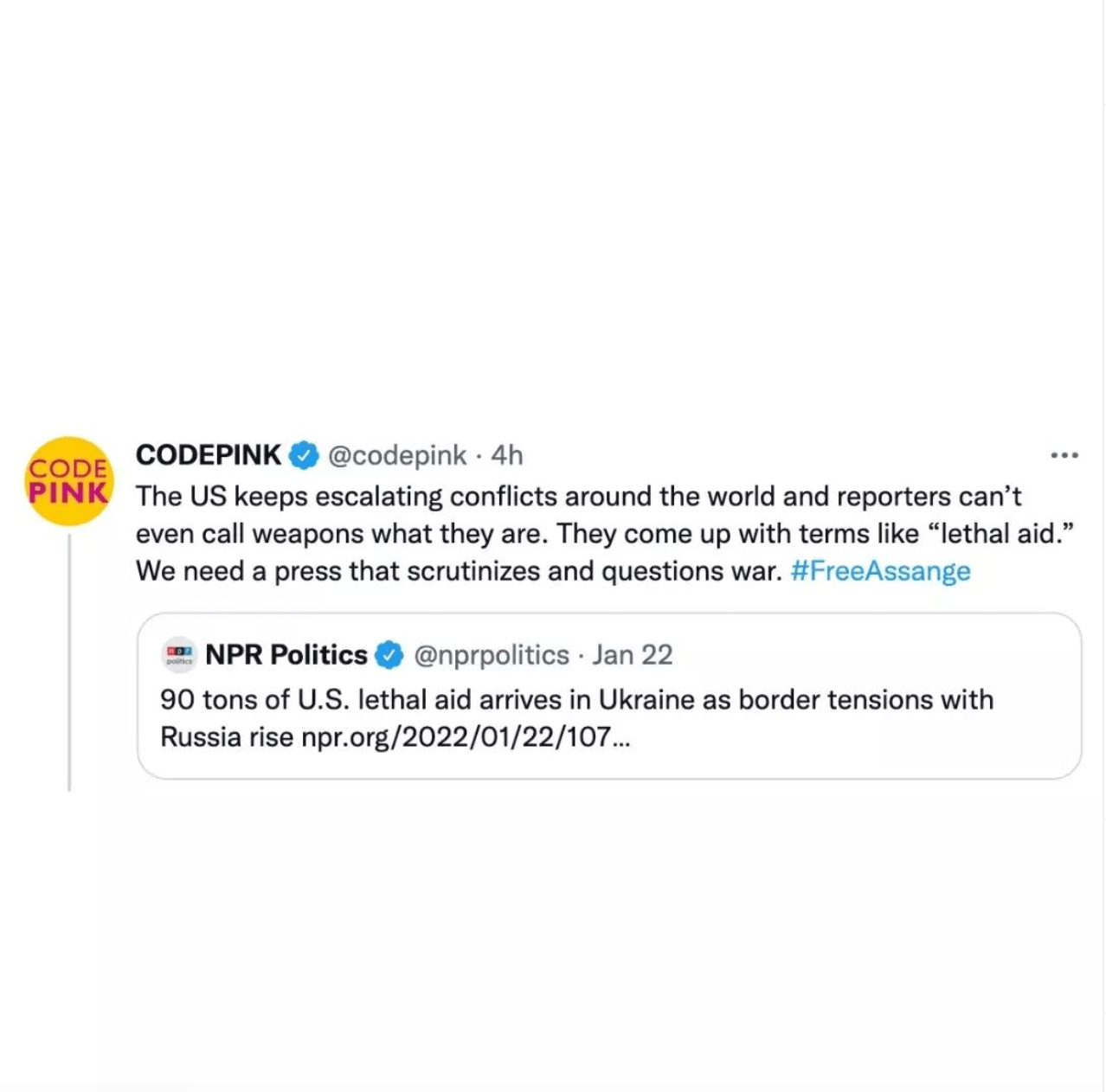

The military escalations between NATO (well, the U.S., really) and Russia over Ukraine are no joke.
The price of war between two nuclear superpowers is as terrifying as it is clear.
So what is it that can get in the way of saying NO to military escalations?
What is this narrative that is simply illogical but so widespread?
A long answer: it is something I have written about extensively in my article called Russia, China, and Our Endless Cold (And Hot) Wars. Little did I know how relevant it would not only when it comes to China but now Russia!
A short answer: it is the accusations that come in a form of a false dichotomy that oftentimes follow any attempt to criticise military escalations.
The dichotomy is simple: if you criticise A, you must like B.
What does that look like?
If you don’t like the idea of AUKUS and the U.S.’ hybrid war on China, you must love everything China does.
If you say let’s not put sanctions on Iran because that means ordinary people don’t have access to medicine, you must be a fan of the Iranian government.
And if you say the U.S. shouldn’t be sending troops to Ukraine, you must like Putin.
What this narrative does, is shrinks the space where dialogue could take place, it doesn’t allow for any meaningful nuance, and makes the idea of diplomacy seem like something hostile towards the very people that it aims to protect from an outbreak of war.
So the ones who say “war is never an aswer” get portrayed as liking authoritarian regimes (because if you criticise A it means you like B, remember?) or simply not understanding the issue (because you wouldn’t be criticising A in the first place then).
Do you see how dangerous this rhetoric is?
Can you see it being used now, when the U.S. is calling for more troops in Europe?
(that is even when Ukrainians themselves are not asking for this sort of help)
In fact, the threat from Russia as it’s felt in Ukraine itself doean’t seem to be how the media in the West is presenting it:
But let’s come back to that false dichotomy.
If we’re rejecting this illogical narrative, what do we have to allow ourselves to think?
Here are some examples.
You can be against war with countries that don’t have a great human rights record.
You can be against sanctions against regimes that you don’t personally like.
And yes, you can be against military escalations when it is Putin who’s on the other side.
I must add, in this specific case, me myself being from a NATO country does add an extra layer of considerations. For example, the fact that there are a lof of people in Eastern Europe who consider the U.S. and NATO as selfless protectors of the region. When historically Russia has been a threat for so long, the desire to have a strong protector that is, well, NOT Russia, is easy to understand.
I still remember something I’ve heard a famous Lithuanian journalist say about Lithuania joining NATO, when I was still a teenager: that NATO – and the U.S. in particular – is an ally that Lithuania (as different political entities throughout the years) has been looking for for…a thousand years.
A thousand years.
How strong is this?
It’s very strong, of course, and to have a powerful ally that you see as a benevolent one must feel great.
But it only fuels that false dichotomy.
And it shouldn’t make us forget how that powerful ally has been “saving” people in different regions. How Iraq was “saved”. What happened to Afghanistan. How, with the ally’s support, people in Yemen are being saved.
In other words, if Russia is seen as having its own interests, why would we not see the U.S. and NATO as actors who also have their interests? And, knowing just the recent history, why would we ever assume that these interests are the wellbeing of Eastern Europeans?
In the end, it’s not about who’s right but which approach can prevent war.
But in this situation, we can’t even be sure that no war is the outcome that the U.S. wants.
The CEO of Raytheon, a major weapons manufacturer, is getting excited to see more escalations in Eastern Europe.
We don’t have tweets from twenty years ago, but I bet this is something similar to how Afghanistan was being seen by military contractors then. According to the Costs of War project, if there is a winner in the 20-year-old war, these are surely private companies.
It would be great to see the U.S. and NATO as the selfless protectors of Eastern Europe. But you can’t unlearn how the U.S. military-industrial complex works, and you cannot unlearn the fact that people who sit on the Board of Directors of weapons manufacturers are oftentimes the same ones shaping the U.S. foreign policy.
And when war is always profitable, why would you use diplomacy?
So what does it mean to be anti-war when a war one has in mind is not a hypothetical one?
I believe it is to notice this dangerous rhetoric, to dismantle it, to refuse to participate in it, and to demand not war but diplomacy.
Latest from the Blog

On Iran, (Ir)rationality, and Those Who Didn’t See Any Destabilisation of The Region in Israel’s Genocide
Remember when Iran used to be called an irrational, unpredictable actor? Well, I invite you to notice any changes when it comes to irrationality, constructed narratives, and how war propaganda looks these days.

On One of The Gravest Crimes against Humanity That Not Every Country Chose to Condemn at The UN
The UN just voted to describe the transatlantic slave trade as ‘the gravest crime against humanity’. Yet not every country, according to its vote, agrees. My commentary is on what the abstentions show.
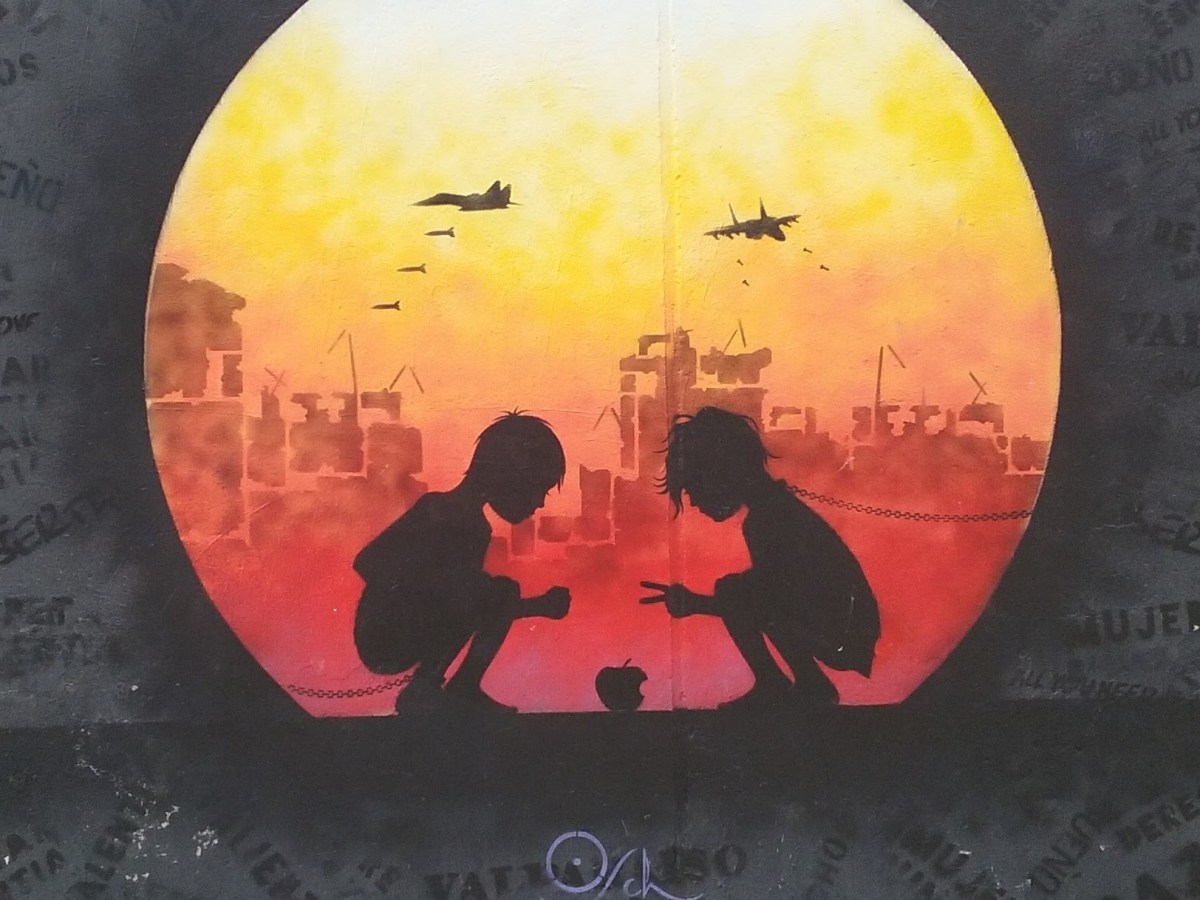
Your Antiwar Voice Is Needed More Than You Might Think
The war machine won’t stop until it’s stopped, just as its propaganda won’t just disappear on its own. It was to be actively pointed to, deconstructed, and rejected as loudly as possible. And this is where everyone’s voice matters.
Good News: We Are on a Boat Ride Together; Bad News: It’s Being Steered by Psychopaths
We’re on a boat steered by psychopaths — and they’re not taking us anywhere nice. As the U.S. and Israel are destroying Lebanon and Iran, one thing can’t be clearer: it is the whole world that has to make them stop.

There Are Those Who Celebrate Women’s Day and Cheer for the Bombing of Schools
Using the “liberation of women” is not new when it comes to justifying the unjustifiable. Notice how it is used again in Iran, including by those who are known to intentionally harm women and children.

MY Country Stands with Fascist Regimes. What about Yours?
Let’s normalise talking about the secondary rage and grief you might be feeling seeing your government appease, bow down to, and support fascist regimes
From Iran to Palestine: Beware Those Who Say They Liberate Children by Bombing Schools
Israel has been murdering children in Palestine and Lebanon for decades. Now, it has chosen to murder children – under the guise of regime change – in Iran.
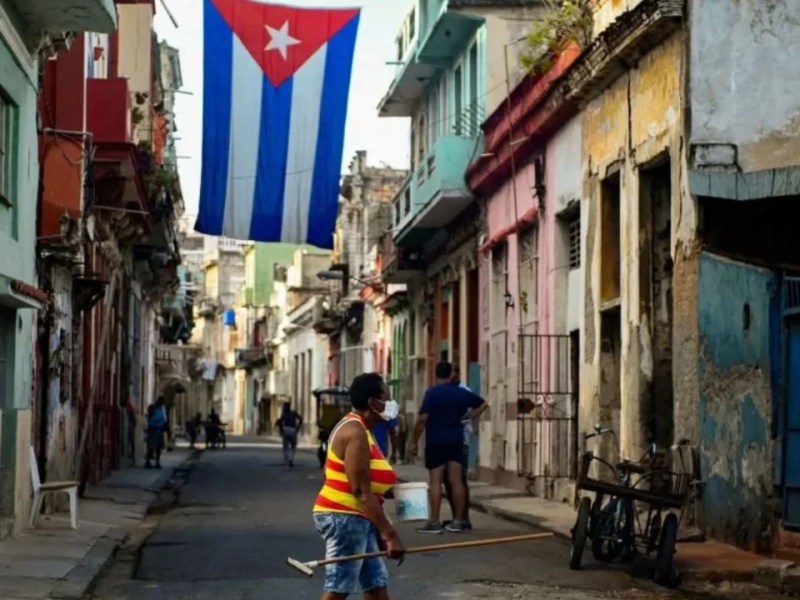
From Cuba to Palestine: Beware Those Who Seek to See Hospitals Run Out of Fuel
What we’re seeing in Cuba is an intensification of imperial violence by those who have been unleashing it on Palestine, too. The parallels here are many, including how the mentality of a coloniser cannot be more on display here.

Have You Witnessed Democratic Mechanisms Being Eroded on Live TV? Here’s An Example
If you couldn’t believe what you were seeing during Pam Bondi’s, the U.S. Attorney General’s testimony in a House Judicial Committee hearing on the Epstein files, here’s how to make sense of it. It’s also why it is terrifying.
From Palestine to The Epstein Files: Will You Demand Justice or Embrace Collective Amnesia?
It is not only the violence by the ones in power that the Epstein files resemble Israel’s destruction of Gaza – it’s about the (potential) collective amnesia, too.
Don’t miss an update! Follow The Exploding Head
Get new content delivered directly to your inbox.
 The Exploding Head Media