
The intensification of violence against Palestinians by Israeli forces in 2023 is clear: the number of people killed is increasing daily.
Yet are we seeing an increase in international condemnation? What about media outrage?
Just like it often is with Palestine, that attention and that outrage is something we ourselves have to raise. In this case, we have to talk about Israel’s brutal assault on Nablus that happened today, February 22, 2023.
Over 100 people were reported injured, and 82 people hit by live ammunition. Among the ones killed, we have a 72-year-old man and a 16-year-old boy.
“The Israeli military said it killed three wanted militants holed up inside a house who refused to surrender. Several of those killed outside were civilians, including two elderly men,” – the BBC reported.
Now, what’s new to say after an attack like this in the West Bank?
We have to inspect the language and deconstruct the narrative.
First, notice “militants”, or, as other sources call them, “gunmen”.
Here, we have to ask what “a militant” is for one of the world’s most powerful armies that is there occupying the West Bank illegally. Who gets to name what? Who gets to imply illegality?
We might also ask what happens to Israeli soldiers who kill Palestinian civilians, yet the answer we already know.
We can then clarify the narrative further:
Palestine doesn’t have a state.
It doesn’t have an army.
It doesn’t control its own borders.
It doesn’t even control its own water.
Just like the killings in Nablus, whatever Israel does, a decontextualised narrative (or, rather, the narrative Israel promotes) will remain the same: Palestinians are not entitled to resistance. They will remain as “militants” “gunmen”, or simply “terrorists”. You hear about “hatred” and a “cycle of violence” at best.
In his article entitled “The Myth of a ‘Cycle of Violence'”, Amjad Iraqi, a researcher, and political scientist, writes,
These fruits of violence, simply put, are derived from the gross asymmetry of power that lies at the heart of this purported “conflict.”
With massive resources and perpetual impunity, one side is able to insulate itself physically and psychologically from the inhumane ways in which it dominates the other.
Palestinians are thus forced to live under the weight of being deemed “killable” — nameless, expendable objects on whom violence can be inflicted without batting an eyelid.
The namelessness and “killability” of Palestinians are clear, and what we saw in Nablus is just one tragic example of such dehumanising rhetoric. Perhaps where the tragedy of little hope lies is in what we saw in recent protests in Tel Aviv and throughout Israel when people took to the streets to oppose proposed judicial reforms. They would undermine the role of the courts and would grant more power to the government to override court rulings, which can be seen as a step towards authoritarianism.
However, a step for whom? Palestinians already live under military occupation and a system of apartheid. Having very few rights – and no right to resist – they have been living under authoritarianism for decades. So when the protesters are marching on the streets, do they demand accountability and democracy for all, or are they expressing dissatisfaction with that authoritarianism now being turned into Jewish citizens, too?
Because as long as the dehumanisation and “killability” of Palestinians are normalised within Israel, by its citizens who don’t demand structural change, the work to pressure the Israeli government gets outsourced to the international community.
So this is where that outrage and condemnation has to come from.
From us.
In my previous article – the one that I can only echo today – on Israel’s attack on Jenin, I presented several simple questions that we have to ask if we want to contextualise anything Israel does. Now, I’ll leave you with a summary as it was posted by Adam Broomberg, an artist and activist you should definitely be following. This summary is not all that we need to know, but it is what the world has to remember.
So, who do we stand for and who do we stand with?
It’s time.
Listen to my episode on the concept of the erasure of the Palestinian people here.
Find my episode on impunity surrounding Israel’s crimes below:
Receive my work directly to your inbox:
Latest from the Blog
On Iran, (Ir)rationality, and Those Who Didn’t See Any Destabilisation of The Region in Israel’s Genocide
Remember when Iran used to be called an irrational, unpredictable actor? Well, I invite you to notice any changes when it comes to irrationality, constructed narratives, and how war propaganda looks these days.
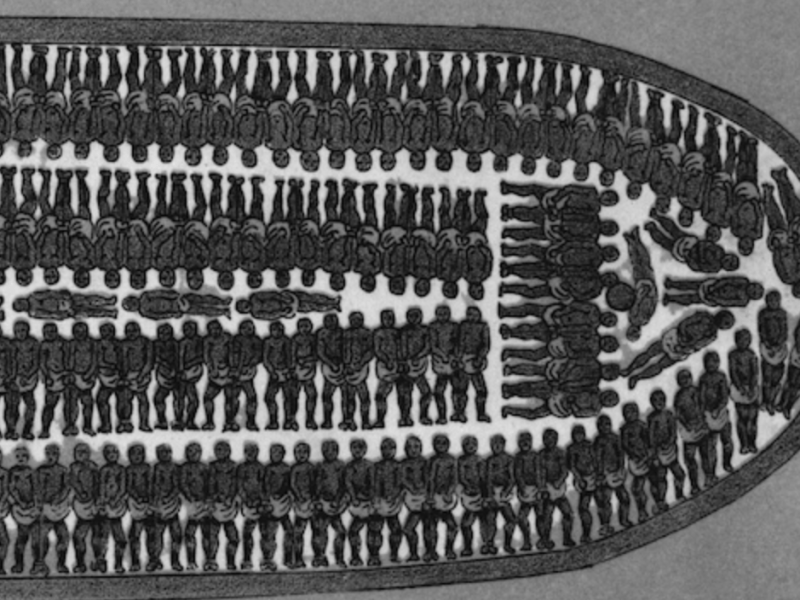
On One of The Gravest Crimes against Humanity That Not Every Country Chose to Condemn at The UN
The UN just voted to describe the transatlantic slave trade as ‘the gravest crime against humanity’. Yet not every country, according to its vote, agrees. My commentary is on what the abstentions show.
Your Antiwar Voice Is Needed More Than You Might Think
The war machine won’t stop until it’s stopped, just as its propaganda won’t just disappear on its own. It was to be actively pointed to, deconstructed, and rejected as loudly as possible. And this is where everyone’s voice matters.
 The Exploding Head Media
One thought on “Israel’s Attack on Nablus: Yet Another Massacre in Palestine”