
At the same time as the world was talking about the unsuccessful attempt of the world’s rich to reach the Titanic, a tragedy of an incomparable scale happened on June 14, 2023.
A boat carrying hundreds of migrants capsized off the coast of Greece.
This is not an “incident” or a one-off occurrence.
Here’s what you need to know about it.
What exactly happened is being investigated right now. But what we do know is that an overcrowded fishing boat set off from Egypt, then stopped in Libya, and was carrying around 750 migrants when it capsized.
More than 100 people were rescued, 80 bodies were found, and an unknown number of people, including children, will probably never be found.
More recent investigations suggested it could be possible that the boat turned over as it was being towed by a Greek coastguard boat, but that’s still unclear. You can see a proposed timeline of events here.
If the boat was towed or not, Human Rights Watch reminds us that not helping the fishing boat before it capsized was rather a choice than an impossibility:
But the tragedy surrounding this tragedy is that it’s not new.
According to IMO”s Missing Migrants Project,
The Central Mediterranean is the deadliest known migration route in the world, with more than 17,000 deaths and disappearances recorded by MMP since 2014.
This is due both to the length of the overseas journey, which can take days, as well as increasingly dangerous smuggling patterns, gaps in search-and-rescue capacity and restrictions on the life-saving work of NGOs.
Migrants often cross the Central Mediterranean in unseaworthy, overloaded inflatable boats. Multiple boats may also be launched at the same time, which complicates search and rescue efforts significantly.
Since 2014, it’s estimated that approximately 27,000 people have died in the Mediterranean Sea trying to reach Europe using this path. “Europe’s deadliest border” – tragically, this title is very deserved.
We understand that seas can be dangerous and overcrowded boats can capsize – but that’s such a small part of the story.
European officials like to point to people smugglers and say it’s their fault. Yet what are they missing?
Here, we have to understand what the EU’s immigration and border policy has been and how it’s been changing. Those changes vary from criminalising helping migrants to defunding sea rescue operations to supporting oppressive regimes.
As Andrew Stroehlein from Human Rights Watch explains in this video,
You give the oppressor money so that person is more powerful and able to oppress people more with that new power. And then you wonder why people want to leave, and then they drown because of EU policy that doesn’t want people fleeing oppression.
It’s madness. It’s a complete failure of moral leadership in the EU at every level.
The before-mentioned Frontex – European Border and Coast Guard Agency – deserves a closer look at its role of saving or letting people die at sea.
I invite you to watch this video that explains what Frontex is and how the whole EU border policy seems to be shifting from saving vulnerable people to deterring them from trying to come here in the first place and denying them basic human rights.
The last question we need to ask if we want to better understand this story is simple: why are the people coming to Europe in the first place?
As Andrew Stroehlein pointed out in his interview, we can’t ignore what the EU has been doing outside of its borders. To add to his point of literally offering oppressive regimes money to keep their people inside, let’s not forget that people are escaping situations that weren’t created in a vacuum.
I think it’s especially clear when we look at Iraq, Afghanistan, and Libya, and ask what troops were sent there, whose drones flown over, and whose bombs dropped. Migration happens for various reasons and even forced migration is a broad category, but when Western forces engage in regime change using violent means, migration from these regions shouldn’t come as a surprise. And more oppression, complete denial, or military solutions will work neither on a moral level nor on a practical one.
Here I’ll add that my own country, Lithuania, has become an example of how human rights can be sacrificed in an attempt to protect European borders.
The illegal and oftentimes violent pushbacks of people trying to cross the Belarussian border into Lithuania and Poland left a number of migrants to lose limbs and literally freeze to death this winter.
As Doctors Without Borders reported in December 2022,
Fourteen people, including children, had to be admitted to the hospital in recent weeks. <…> Several people needed limb amputations, and for some patients it is still unclear if their limbs can be saved. This is preventable and totally unacceptable. People will die if nothing changes.
Georgina Brown, MSF project coordinator in Lithuania and Latvia
A member of Sienos Grupe, a Lithuanian NGO assisting migrants on the Lithuanian border, told me that this is what was needed:
To be more critical when it comes to what the politicians are saying. To pressure journalists and NGOs to do their work.
I think that’s very true.
Lithuanian politicians are fine with letting migrant families freeze by its border; they are fine with sending people back where they face deadly threats. But, as you might have guessed, that all comes in contrast to how Ukrainian refugees are being treated, and how suddenly human rights matter and empathy appears when people escaping hardships are white.
Fortress Europe is a real thing.
Europe is welcoming – to Europeans and people it deems worthy.
For the most vulnerable people, including people whose countries Europe has helped to invade, bomb, and steal resources from, it remains a fortress. A fortress that is not some passive object but a subject that’s consciously protecting itself.
As a European myself, I’ve been speaking out and apologising for such dehumanising policies, but this recent tragedy showed how much political work and activism are still needed, by all of us. The first step is to understand why and where.
The next one depends on you: whether it’s to join or financially support a local organisation that’s assisting migrants, to see where international organisations need help, and to find out what your own country’s policies towards migrants and refugees are.
And most importantly, speak out against dehumanising rhetoric when it comes to people risking their lives – and so often losing them – to reach a region that can seem so promising.
Justina
PS. I’ve also filmed a quick video for you to share with the ones who might benefit from reading my piece:
Resources to explore:
- Platform for Undocumented Migrants (PICUM)
- Amnesty International
- IMO’s Missing Migrants Project
- MOAS, an organisation you might want to support
Receive my work directly to your inbox:
Latest from the Blog
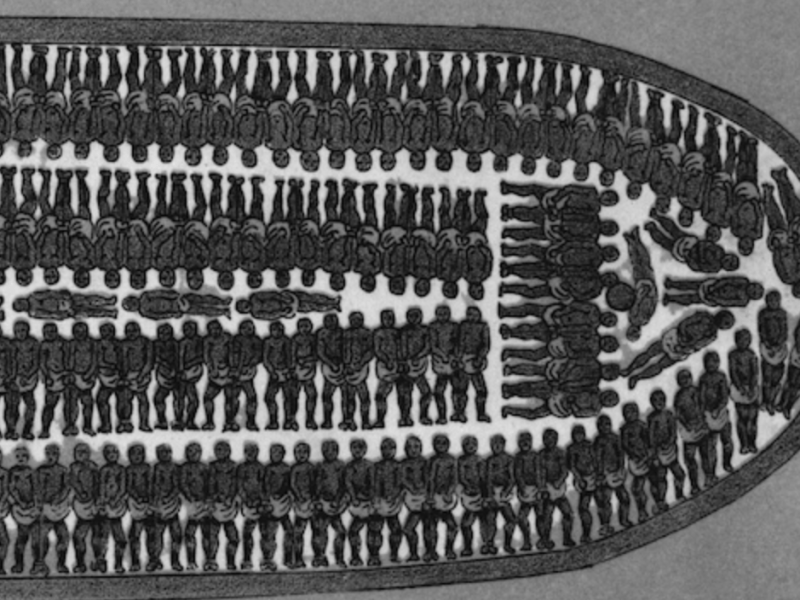
On One of The Gravest Crimes against Humanity That Not Every Country Chose to Condemn at The UN
The UN just voted to describe the transatlantic slave trade as ‘the gravest crime against humanity’. Yet not every country, according to its vote, agrees. My commentary is on what the abstentions show.
Your Antiwar Voice Is Needed More Than You Might Think
The war machine won’t stop until it’s stopped, just as its propaganda won’t just disappear on its own. It was to be actively pointed to, deconstructed, and rejected as loudly as possible. And this is where everyone’s voice matters.

Good News: We Are on a Boat Ride Together; Bad News: It’s Being Steered by Psychopaths
We’re on a boat steered by psychopaths — and they’re not taking us anywhere nice. As the U.S. and Israel are destroying Lebanon and Iran, one thing can’t be clearer: it is the whole world that has to make them stop.
 The Exploding Head Media
One thought on “Another Tragedy Trying to Reach Fortress Europe: What Do We Need to Know?”