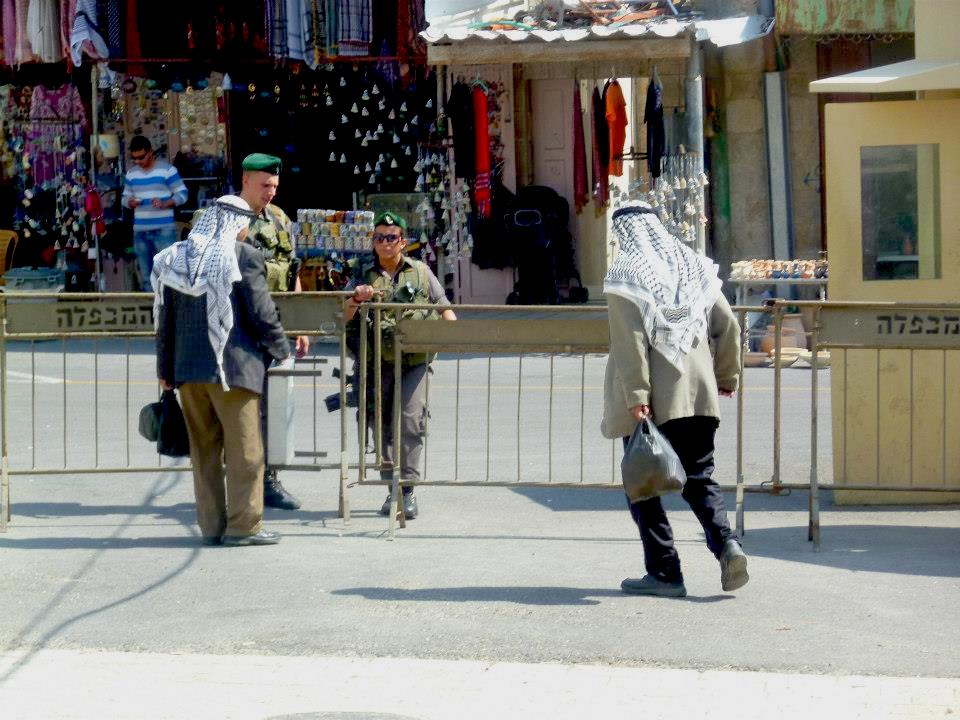
Israeli soldiers patrolling in Hebron, a Palestinian city that has an illegal settlement inside and streets where Palestinians are not allowed (photo credits: me)
It’s a system of apartheid.
This is how Human Rights Watch has summarised its extensive report documenting how the Israeli government treats Palestinians living both inside of Israel and in the Occupied Territories.
This is in fact the first time Human Rights Watch (HRW) has used ‘apartheid’ in its reporting.
The report, A Threshold Crossed, released on April 27, 2021, documents and summarises the policies of the Israeli government that, according to the definition of apartheid as stated in the UN Apartheid Convention and the Rome Statute of the International Criminal Court (ICC), constitutes this crime.
In my a bit longer than usual episode, I aim to do the following:
- present the definition of apartheid used by HRW (based on the above-mentioned documents),
- summarise several points of HRW findings that I myself hadn’t mentioned in my previous episodes,
- point to broader questions that we have to ask countries regarding what international organisations say about them.
Since I originally released this episode, two more prominent bodies – Amnesty International and The International Human Rights Clinic at Harward Law School – had the same conclusions in their reports on Israeli state policies.
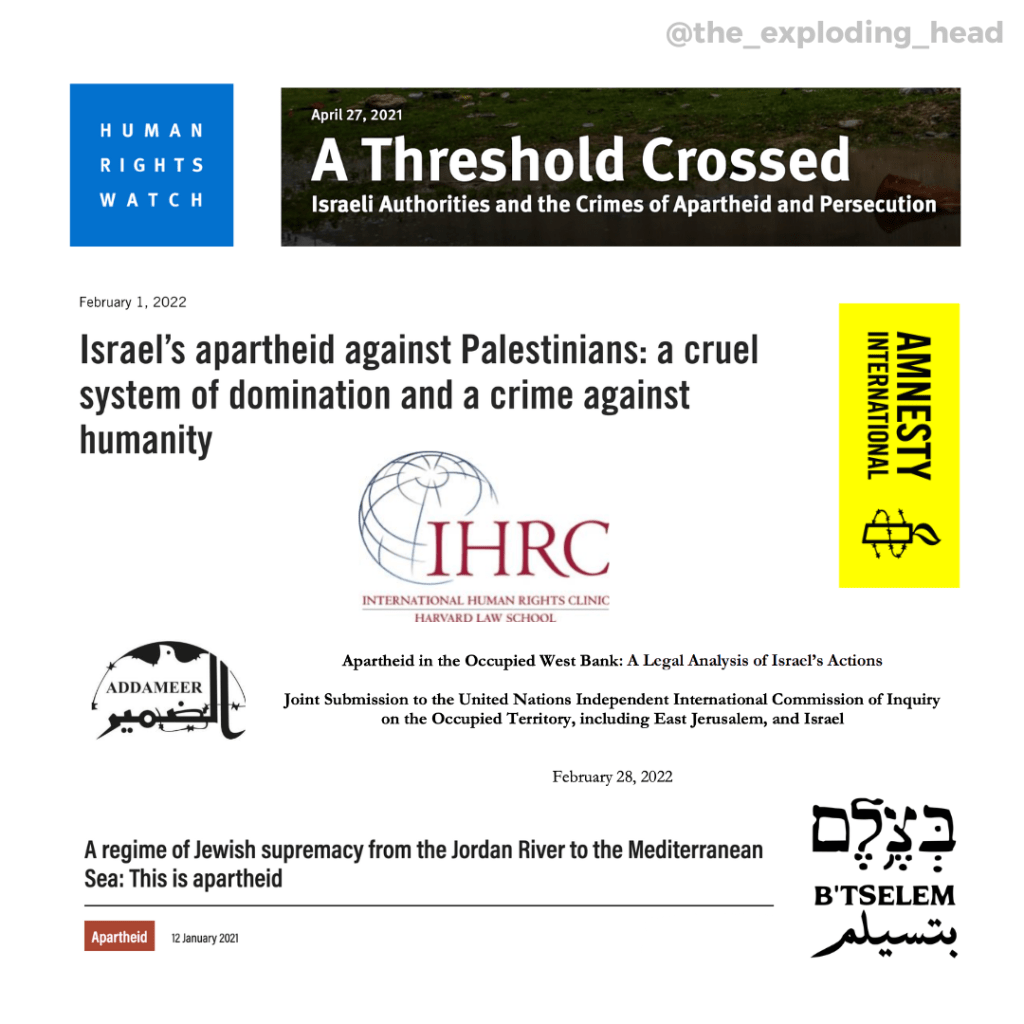
(Please feel free to download this visual and share it on your social media)
Even before that, different organisations – for example, B’Tselem – have accused Israel of committing the crime of apartheid.
References:
- Rome Statute of the International Criminal Court
- The UN Apartheid Convention (it’s not a long document, check it out)
- Legality of Israel’s Policy Regarding the Revocation of Residency in East Jerusalem, a document by the legal team of the Norwegian Refugee Council
- Planning Policy in The West Bank, by B’Tselem, an Israeli human rights organisation
- Residency Revocation: Israel’s Forcible Transfer of Palestinians from Jerusalem, by Al-Haq, a Palestinian human rights organisation.
Subscribe to receive my articles directly to your inbox here:
Latest from the Blog
On One of The Gravest Crimes against Humanity That Not Every Country Chose to Condemn at The UN
The UN just voted to describe the transatlantic slave trade as ‘the gravest crime against humanity’. Yet not every country, according to its vote, agrees. My commentary is on what the abstentions show.
Your Antiwar Voice Is Needed More Than You Might Think
The war machine won’t stop until it’s stopped, just as its propaganda won’t just disappear on its own. It was to be actively pointed to, deconstructed, and rejected as loudly as possible. And this is where everyone’s voice matters.

Good News: We Are on a Boat Ride Together; Bad News: It’s Being Steered by Psychopaths
We’re on a boat steered by psychopaths — and they’re not taking us anywhere nice. As the U.S. and Israel are destroying Lebanon and Iran, one thing can’t be clearer: it is the whole world that has to make them stop.
There Are Those Who Celebrate Women’s Day and Cheer for the Bombing of Schools
Using the “liberation of women” is not new when it comes to justifying the unjustifiable. Notice how it is used again in Iran, including by those who are known to intentionally harm women and children.
MY Country Stands with Fascist Regimes. What about Yours?
Let’s normalise talking about the secondary rage and grief you might be feeling seeing your government appease, bow down to, and support fascist regimes
From Iran to Palestine: Beware Those Who Say They Liberate Children by Bombing Schools
Israel has been murdering children in Palestine and Lebanon for decades. Now, it has chosen to murder children – under the guise of regime change – in Iran.
 The Exploding Head Media
3 thoughts on “What Do We Talk About When We Talk About Palestine? Part 4: International Organisations”