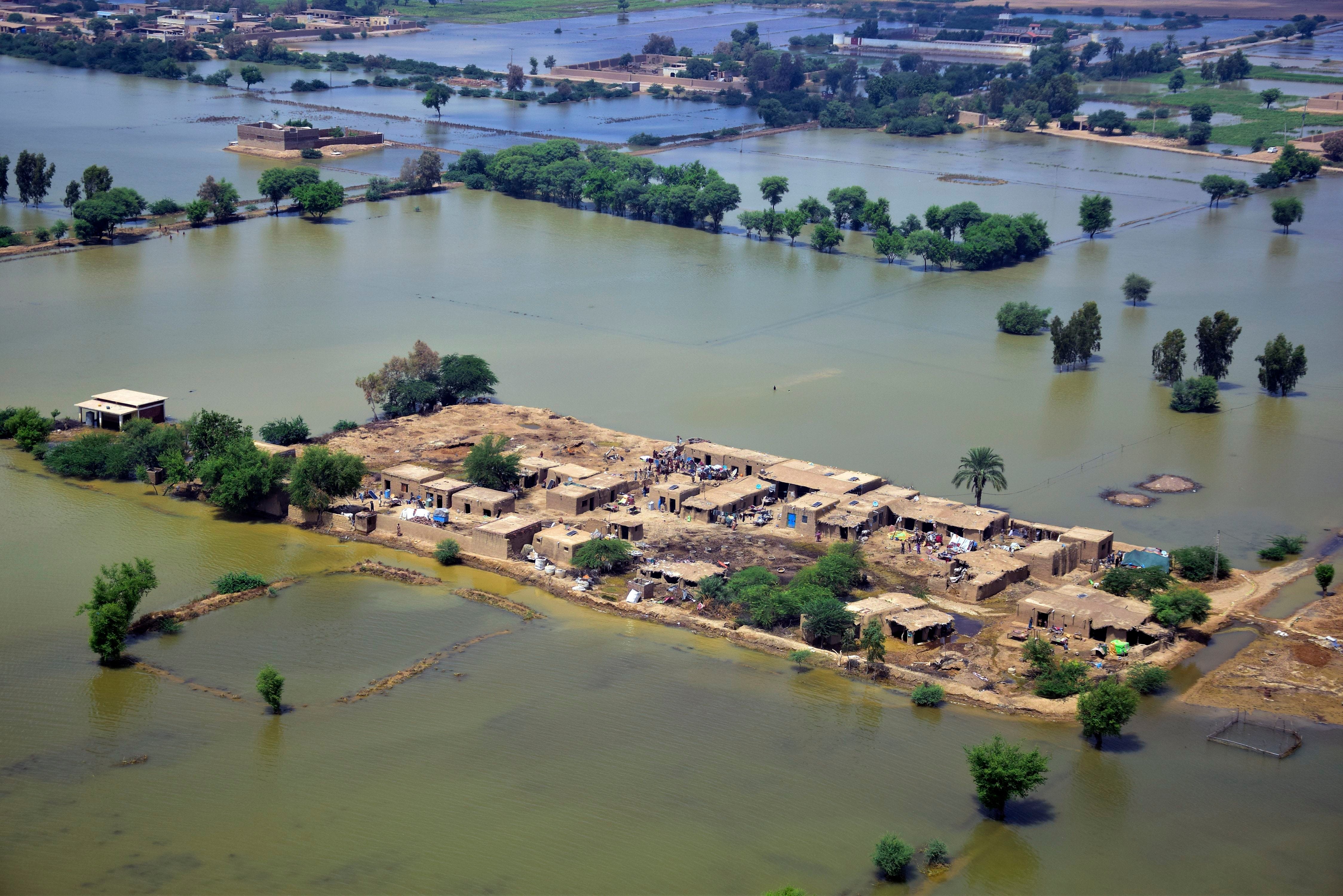
The images are horrific: muddy water all you can see, with tiny objects that turn out to be houses sticking out of it. In another video, a powerful stream of water is washing away entire towns.
Pakistan is suffering from historic floods which have already affected over 33 million people.
And although we have to do everything we can to help the people of Pakistan now, the bigger story is not about this country. This tragedy – a man-made disaster – is a harsh reminder that the people who are most contributing to our climate emergency are not necessarily the ones who are paying the price.
To see it clearly, we have to look at three dichotomies. These are types of debates we often hear and something that can change the way we see, understand, and talk about the climate crisis.
Production vs. Consumption
It answers the question of how to measure the very thing we are talking about. When we talk about polluters (and let’s only take CO₂ emissions in this case) in terms of nation-states, are we looking at how much a country produces, or are we focusing on how much a country consumes? These are very different questions to ask – with very different answers.
For example, when we look at total CO₂ emissions, we see China at the top. If we look at CO₂ emissions per capita, China falls by 40 points. In Pakistan’s case, it is low on both of these scales, producing only 0.5% of the world’s CO₂ emissions.
Yet what is more revealing is not so much production but consumption. Now here we see a very different picture: as expected, wealthier countries consume significantly more per capita. This doesn’t come as a surprise, yet we have to remember this next time when we hear that these are countries that are going through higher levels of industrialisation that are the polluters we need to point our fingers at. Instead, it’s a reminder that what also needs to be addressed and changed drastically are the literally devasting consumption habits of the Global North.

For a deeper analysis of the production vs. consumption lens, please watch this video on Democracy Now.
Non-military vs. Military Pollution
The second dichotomy we need to inspect is the one that answers the question of what to include in our measurements. In short, there is one major polluter that rarely gets included in the already horrifying statistics on climate change that we’re seeing: that is military pollution. How do we account for institutions that have their branches abroad and don’t pollute just their own native soil? It turns out, this question is crucial to ask if we want to get to the root of the climate emergency we find ourselves in.
When we take the US military – the largest military in the world – the numbers are shocking here. As The Conversation reported,
The US military is one of the largest polluters in history, consuming more liquid fuels and emitting more climate-changing gases than most medium-sized countries. If the US military were a country, its fuel usage alone would make it the 47th largest emitter of greenhouse gases in the world, sitting between Peru and Portugal.
The conclusion is simple: if we don’t count it, it doesn’t count. That’s why we can’t talk about climate change and all the disastrous forms it is showing itself to us without addressing one of its major causes.
The Global South vs. The Global North
Everything leads to one more dichotomy that I invite you to notice. It answers the question of who gets shamed in this debate. Having looked at the two previous dichotomies, it is clear that it’s not enough to say that everyone needs to do their part. And it’s simply unfair to blame the Global South that the North is treating as a complex of cheap factories and a place to dump its trash (literally). It is incorrect to point to countries that are moving to higher development levels which indeed results in higher levels of CO₂ consumed without pointing that finger at the regions whose consumption levels are already high.
And not to add the war machine to this one long equation is either intentional (and it is, so we have to campaign for it) or completely ignorant.
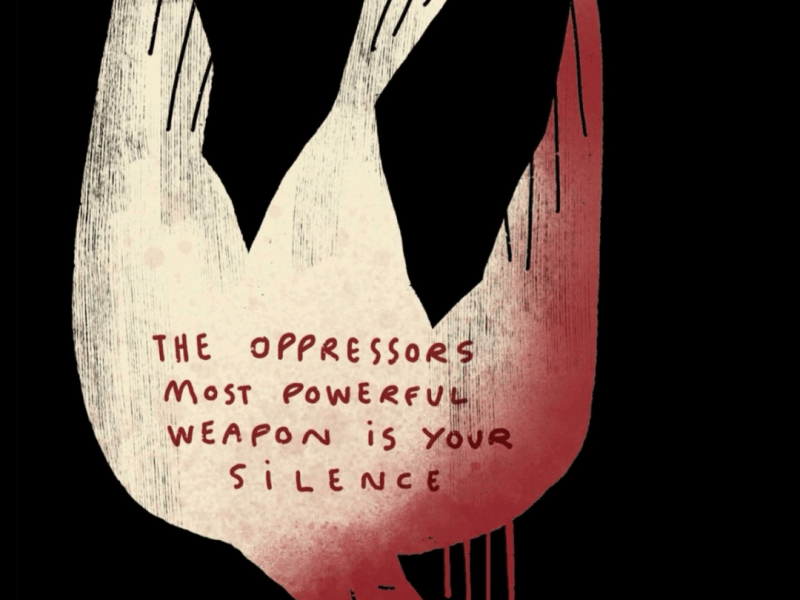
It’s time to see these dichotomies for what they are. It’s time to deconstruct them. And it’s time to raise our voices because the people of Pakistan are not only paying the price for our ignorance – they are paying the price for our inaction.
Justina
Here’s my podcast episode where I talk about the same dichotomies:
Receive my work directly to your inbox:
Latest from the Blog
On One of The Gravest Crimes against Humanity That Not Every Country Chose to Condemn at The UN
The UN just voted to describe the transatlantic slave trade as ‘the gravest crime against humanity’. Yet not every country, according to its vote, agrees. My commentary is on what the abstentions show.
Your Antiwar Voice Is Needed More Than You Might Think
The war machine won’t stop until it’s stopped, just as its propaganda won’t just disappear on its own. It was to be actively pointed to, deconstructed, and rejected as loudly as possible. And this is where everyone’s voice matters.
Good News: We Are on a Boat Ride Together; Bad News: It’s Being Steered by Psychopaths
We’re on a boat steered by psychopaths — and they’re not taking us anywhere nice. As the U.S. and Israel are destroying Lebanon and Iran, one thing can’t be clearer: it is the whole world that has to make them stop.
There Are Those Who Celebrate Women’s Day and Cheer for the Bombing of Schools
Using the “liberation of women” is not new when it comes to justifying the unjustifiable. Notice how it is used again in Iran, including by those who are known to intentionally harm women and children.
MY Country Stands with Fascist Regimes. What about Yours?
Let’s normalise talking about the secondary rage and grief you might be feeling seeing your government appease, bow down to, and support fascist regimes
From Iran to Palestine: Beware Those Who Say They Liberate Children by Bombing Schools
Israel has been murdering children in Palestine and Lebanon for decades. Now, it has chosen to murder children – under the guise of regime change – in Iran.
From Cuba to Palestine: Beware Those Who Seek to See Hospitals Run Out of Fuel
What we’re seeing in Cuba is an intensification of imperial violence by those who have been unleashing it on Palestine, too. The parallels here are many, including how the mentality of a coloniser cannot be more on display here.

Have You Witnessed Democratic Mechanisms Being Eroded on Live TV? Here’s An Example
If you couldn’t believe what you were seeing during Pam Bondi’s, the U.S. Attorney General’s testimony in a House Judicial Committee hearing on the Epstein files, here’s how to make sense of it. It’s also why it is terrifying.
From Palestine to The Epstein Files: Will You Demand Justice or Embrace Collective Amnesia?
It is not only the violence by the ones in power that the Epstein files resemble Israel’s destruction of Gaza – it’s about the (potential) collective amnesia, too.

How Fascist Regimes See Growing up, Standing up for People, and Writing Poems as Threats
Hind Rajab was killed by Israeli forces two years ago today – and that is one of the threads of history that I talk about in my essay-like video. It’s about fascism, its victims, the heaviness of witnessing these horrors, and how we can move forward.
 The Exploding Head Media