If a type of weapon is banned by over a hundred countries, you should listen up.
That’s exactly the case with cluster bombs.
And that’s what the US wants to send to Ukraine.
I first learned about cluster munitions in my early 20s: I was living in Southeast Asia and was about to visit Laos, a country whose history I wasn’t familiar with at all. It started with “Let me quickly learn about it” and ended in a research and travel experience that still impacts what I do to this day. That’s because we still have to talk about both Henry Kissinger’s crimes and the need to completely ban cluster munitions.
And we really have to talk about cluster bombs now since it’s what the US wants to sell – profiting its arms manufacturers – and ship to Ukraine.
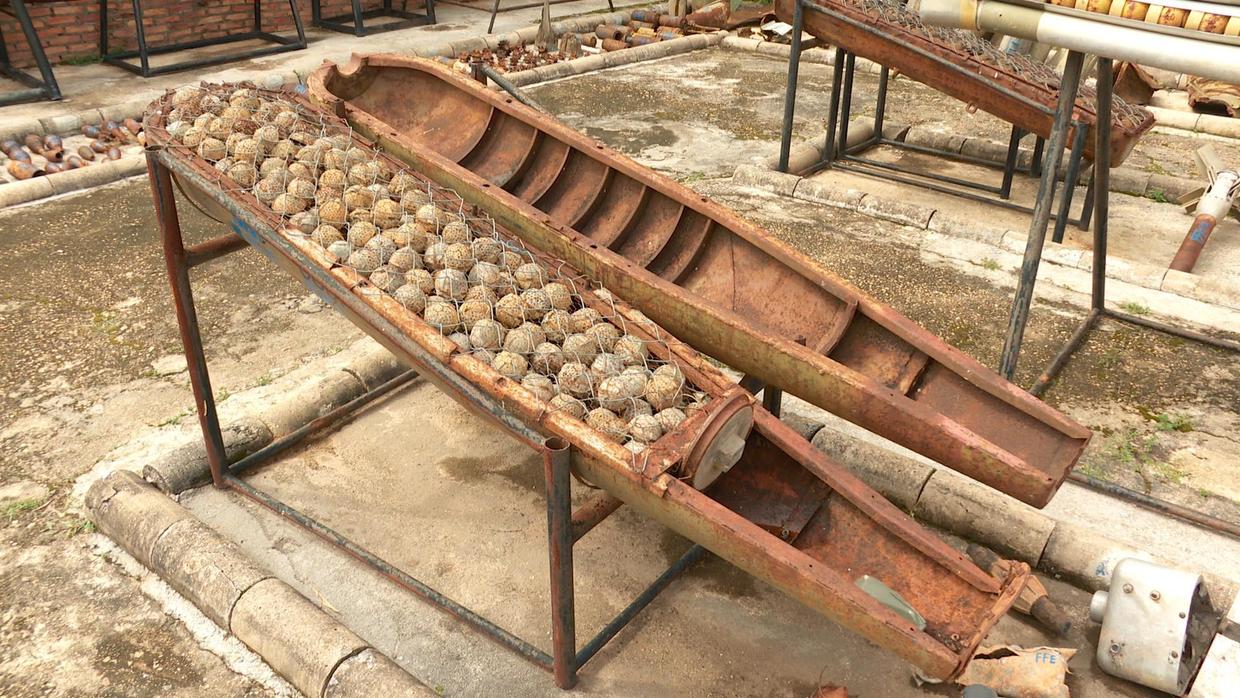
Why is this concerning? Because of how these bombs work. To put it in simple language, cluster bombs are bombs that have smaller bombs (bomblets) inside. Some of the bomblets might explode in the air, some – already on the ground, while some simply fail to explode. The official term for them is unexploded ordnance (UXO) and we know that they can remain unexploded years after wars officially end. The worst thing about them is that they disproportionally affect civilians: according to the 2022 monitoring report by the Cluster Munition Coalition, 97% of victims were civilians and 66% of those injured or killed were children.
The good news in this dark story is that over 100 countries have realised that these munitions are not something we should keep on using. In 2008, Convention on Cluster Munitions was signed, banning the production, use, stockpiling, and transfer of cluster bombs.
As the map below shows, 110 countries have signed and ratified it, 13 have signed and are yet to ratify it, while some dozens haven’t taken any action on it.

Naturally, the fact that a country hasn’t ratified this treaty doesn’t mean it’s using or producing cluster bombs. So who’s still producing them? According to Cluster Munition Coalition, these are Brazil, China, Egypt, Greece, India, Iran, Israel, North Korea, South Korea, Pakistan, Poland, Romania, Russia, Singapore, Turkey, and the US.
You might have heard about cluster bombs in different settings. Since the end of the Second World War, it’s reported that they were used by at least 21 governments in 40 countries (you can see a table with user state and locations used here and a timeline here).
Some examples of where cluster bombs were used are Bosnia, Cambodia, Vietnam, Lebanon, Iraq, Afghanistan, and Syria. Both Russia and Ukrainian forces have already used cluster bombs in Ukraine, reports Human Rights Watch, so, unfortunately, a new shipment wouldn’t be a completely new phenomenon in the region.
The Pentagon says the cluster munitions it will be sending to Ukraine have an unexploded rate of 2.35% or less, which is already being questioned by pointing to another Pentagon report where older models of the same bombs reported an unexploded rate of 14%. These are “better cluster bombs”, the US seems to say.
But at this point, we know too much. There are too many examples. Too many painful histories of countries still trying to get rid themselves of these weapons.
In Laos, cluster bombs still create obstacles to long-term development for its population fifty years after the war. The country is still demining and can’t use its land how they’d like to use it. Children are still losing limbs, farmers are still losing eyes, and generations are doing demining work instead of dedicating their lives to literally anything else.
No matter how you might wish for this horrific war in Ukraine – and other wars – to end, there are just some things you don’t wish on any country. And I hope you don’t wish decades of injuries, death, and demining work onto anyone.
Justina
PS. I’ve also filmed a quick video for you to share with the ones who might benefit from reading my piece:
Resources to explore:
- Legacies of War
- Cluster Munition Coalition
- Landmine & Cluster Munition Monitor
- Mines Advisory Group (MAG)
- Petition by CODEPINK to stop the Congress from sending cluster bombs to Ukraine
Receive my work directly to your inbox:
Latest from the Blog

On Iran, (Ir)rationality, and Those Who Didn’t See Any Destabilisation of The Region in Israel’s Genocide
Remember when Iran used to be called an irrational, unpredictable actor? Well, I invite you to notice any changes when it comes to irrationality, constructed narratives, and how war propaganda looks these days.

On One of The Gravest Crimes against Humanity That Not Every Country Chose to Condemn at The UN
The UN just voted to describe the transatlantic slave trade as ‘the gravest crime against humanity’. Yet not every country, according to its vote, agrees. My commentary is on what the abstentions show.
Your Antiwar Voice Is Needed More Than You Might Think
The war machine won’t stop until it’s stopped, just as its propaganda won’t just disappear on its own. It was to be actively pointed to, deconstructed, and rejected as loudly as possible. And this is where everyone’s voice matters.
 The Exploding Head Media