How does a country fall from the podium of democracy?
And is it always a sudden fall?
It’s easy to point to regimes that are known for their human rights abuses, lack of access to democratic practices, and more clearly identified types of oppression.
Yet here we have to remember two things:
One, just because something isn’t “clearly identified” it doesn’t mean it’s not there.
And two, countries don’t necessarily become authoritarian suddenly. And this is what I’d like to explore with you today.
Where should we look to see if our countries are slipping into authoritarianism?
In political science, one of the words for this process is de-democratisation.
If democratisation can be defined as an increasing strengthening of a country’s democratic institutions and practices, then you might guess what de-democratisation is. It’s the opposite:
It’s the process of dismantling those same institutions and processes.
When it’s not something sudden and obvious, like a military coup, but a gradual process, it can be more difficult to spot, point a finger at, and name.
What can that gradual process entail?
To answer that, we have to first ask what democracy is in the first place.
Unfortunately, and maybe unexpectedly to some, in political science, the definition of democracy is not as straightforward as you might think.
There’s an article I would recommend for the extra-curious ones, by David Collier and Steven Levitsky, called “Democracy with Adjectives: Conceptual Innovation in Comparative Research.” Among other issues, it discusses conceptual stretching that may occur when categorising regimes: how the quest to define and categorise democracies has led to “democracy with adjectives,” resulting in subtypes like “authoritarian democracy” (exactly).
In short, if political science can’t provide us with one single definition, I definitely can’t.
However, there are surely elements of a political system that make it more democratic. There are a number of attributes that, when accumulated, place a regime on a spectrum. It has some kind of ideal liberal democracy at one end and authoritarianism at the other.
Here are some examples of such attributes:
- Access to voting: let’s assess voting laws and voter suppression policies,
- Media freedom: let’s look into media ownership and how concentrated it is; the physical safety of journalists; are they being jailed or prosecuted for exposing your country’s war crimes? (remember Julian Assange?)
- Separation of branches of the government: for example, are the courts independent?
There are two more attributes that I’d like to draw your attention to as they might be resonating with you more strongly these days. Perhaps it’s something you’ve witnessed but didn’t know how to call, under which conceptual umbrella to place it. What’s truly saddening is that it’s not a single-country issue. But let me get back to these attributes of democratic regimes:
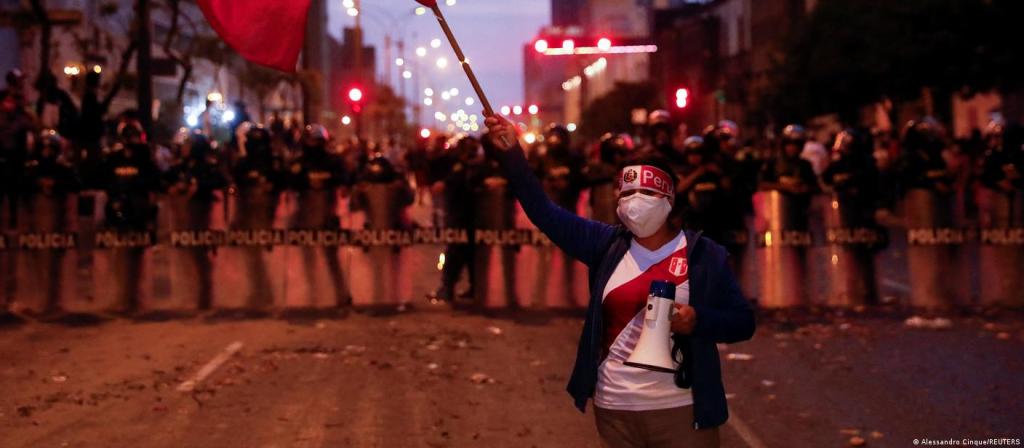
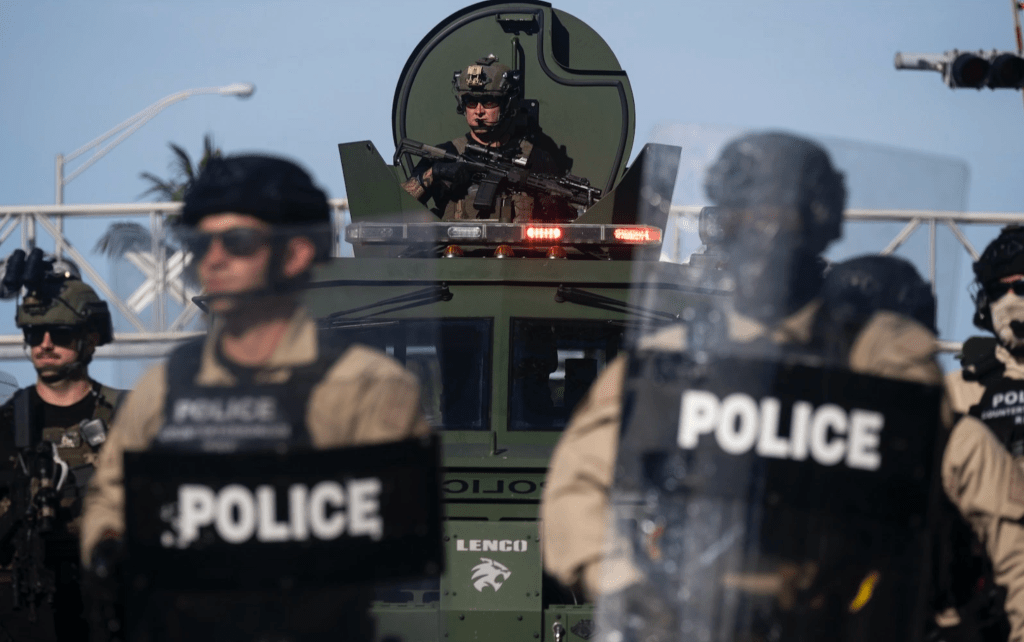
- Forces that are used for external protection should not be used for internal control: for example, is the army brought to the streets to suppress protests? How militarised is the police?
- How political losers deal with a loss: for example, does a party or an individual who lost an election accept their defeat, or do they claim the election was rigged? If they were in power before, do they agree to leave? In well-established democracies, the losers tend to accept the outcome more readily because they generally trust the political process.
In short, to see any of these happen is a big deal. It becomes more than concerning actions within a system: it might be a move towards a different system whatsoever.
And it should be equally scary if these steps are being taken by someone you approve of or disapprove of. This leads us to an important disclaimer:
De-democratisation doesn’t mean a party you didn’t support is in power.
It doesn’t even refer to someone holding rather terrifying political beliefs being in power – even the most hateful politician might not engage in de-democratisation.
We shouldn’t be ringing that de-democratisation bell unfairly. But when it happens, we have to be vigilant.

Read my latest articles here:
- On One of The Gravest Crimes against Humanity That Not Every Country Chose to Condemn at The UNThe UN just voted to describe the transatlantic slave trade as ‘the gravest crime against humanity’. Yet not every country, according to its vote, agrees. My commentary is on what the abstentions show.
- Your Antiwar Voice Is Needed More Than You Might ThinkThe war machine won’t stop until it’s stopped, just as its propaganda won’t just disappear on its own. It was to be actively pointed to, deconstructed, and rejected as loudly as possible. And this is where everyone’s voice matters.
- Good News: We Are on a Boat Ride Together; Bad News: It’s Being Steered by PsychopathsWe’re on a boat steered by psychopaths — and they’re not taking us anywhere nice. As the U.S. and Israel are destroying Lebanon and Iran, one thing can’t be clearer: it is the whole world that has to make them stop.
- There Are Those Who Celebrate Women’s Day and Cheer for the Bombing of SchoolsUsing the “liberation of women” is not new when it comes to justifying the unjustifiable. Notice how it is used again in Iran, including by those who are known to intentionally harm women and children.
- MY Country Stands with Fascist Regimes. What about Yours?Let’s normalise talking about the secondary rage and grief you might be feeling seeing your government appease, bow down to, and support fascist regimes
- From Iran to Palestine: Beware Those Who Say They Liberate Children by Bombing SchoolsIsrael has been murdering children in Palestine and Lebanon for decades. Now, it has chosen to murder children – under the guise of regime change – in Iran.
 The Exploding Head Media
2 thoughts on “Is Your Country Slipping Into Authoritarianism?”